Share




What begins as a dream is becoming data, and data is becoming design.
Nearly twenty years ago, while working in Tanzania, a young architects assistant found himself imagining a design office that did not yet exist.
At the time, the industry still revolved around sketches, tracing paper, AutoCAD drawings, ArchiCAD 3D models were the thing, we blew clients away with these and long meetings between clients and designers. Every project began with a conversation, a client would explain what they wanted, the Principal Architect would site there listening as the Assistant scribbled and took notes, and the process of translating ideas into drawings would begin.
But in his mind, the assistant saw something entirely different.
He imagined a modern studio resembling a bank, tour booking agency or customer service center, along one side of the room sat a row of assistants, technicians, each equipped with a computer. Clients would walk in, sit across from an agent, and describe the home they wanted to build.
“How large should the living room be?”
“How many bedrooms?”
“Would you like a pantry?”
“Do you need a cloakroom?”
As the client answered, the information would be entered into a computer and on a screen facing the client, bubbles representing rooms would begin to appear, living room, kitchen, bedroom 01, Master bedroom, Ensuite master bathroom, common/shared bathrooms, study spaces etc.
The brief would slowly transform into data.
Once complete, the client would be able to move the bubbles around, arranging spaces according to their lifestyle and preferences with the touch of a finger, rooms could be shifted, resized, or repositioned, Then, with a single command, the software would convert the bubble diagram into a simple conceptual floor plan complete with walls, doors, windows, and circulation paths.
At the time, it sounded like science fiction, today, it sounds remarkably familiar.
In fact, elements of that vision are already becoming part of everyday practice, At Ololapopo Construction Services, clients are often invited to participate directly in the concept development process during an initial consultation, ideas are discussed, spaces are explored, and within minutes a preliminary concept plan and simple three-dimensional visual can be generated. Clients are able to see, touch, and interrogate their ideas long before detailed design begins.
What once took days or weeks of back-and-forth communication can now happen during a single sitting. The objective is not to replace professionals, but to help clients better understand their own aspirations before the project progresses to the architects, engineers, quantity surveyors, and other specialists responsible for developing the design into a buildable reality.
The dream that once existed only in the imagination of a young Kenyan assistant in Tanzania is no longer a distant possibility. It is already beginning to take shape.
Recent advances in artificial intelligence, Building Information Modelling (BIM), and high-performance computing are bringing this vision closer to reality than ever before. Technologies powered by increasingly powerful processors and AI engines can already generate layouts, produce 3D models, create visualization’s, perform energy simulations, and assist with construction documentation in a fraction of the time once required.
The significance of these developments is not simply that computers are becoming faster, the real transformation lies elsewhere, for decades, construction professionals have worked from client briefs, where a client described a problem, and the architect, engineer, or contractor developed a solution.
Today, clients are arriving with solutions already in hand.
Some bring AI-generated images while others arrive with Pinterest boards, digital mood boards, preliminary floor plans, or concept designs generated using online tools. Increasingly, clients are able to explore dozens of design options before ever speaking to a professional.
This changes the nature of the relationship; the traditional brief is slowly evolving from a conversation into structured information, and once information becomes structured data, it can be processed, analyzed, simulated, and transformed by machines, and this poses profound implications for the construction industry.
Historically, builders relied on experience. Later, the industry evolved to rely on drawings, more recently, BIM shifted the focus toward digital models, the next stage may be an industry driven primarily by data.
In this emerging future, the floor plan is no longer the starting point, it is the output of a larger system that understands client requirements, regulations, performance targets, budgets, sustainability goals, and construction methods.
The question then becomes: where does that leave the professional?
Contrary to popular fears, architects, AEC assistants, technicians, engineers, and contractors are unlikely to disappear, their value simply changes.
If software can generate concepts, then the professional’s role becomes interpretation, If artificial intelligence can produce options, the professional becomes the guide who evaluates them, If machines can draft, the professional becomes responsible for judgment, compliance, buildability, risk management, quality assurance, and strategic decision-making.
The future professional may spend less time drawing and more time advising.
For Africa, this transformation presents both an opportunity and a challenge.
A young family in Nairobi, Kisumu, Kampala, Dar es Salaam, or Kigali may soon be able to generate multiple house concepts from a smartphone before contacting a designer, Expectations will rise and decision-making will accelerate because tomorrows clients will become more informed and more demanding. Those that continue to sell drawings alone may struggle but those that will sell expertise, guidance, coordination, and trust will thrive.
The greatest disruption facing the construction industry is not artificial intelligence itself, it is the changing nature of the client brief, what was once a conversation is becoming data.
And as data becomes the foundation of design, the construction industry will be forced to rethink not only how buildings are delivered, but also the role of the professionals who deliver them.
The future is not arriving.
It is already sitting across the desk.
That said,
What Do You Think?
Is the traditional client brief disappearing?
Will future homeowners design their own concepts before consulting architects, engineers, and builders? And if so, how should construction professionals adapt?
We would love to hear your thoughts.
Join the conversation with Ololapopo Construction Services at Kandarasi House digitally at https://www.facebook.com/share/g/1EHjPCEo1V/ or physical location and share your views on the future of design, technology, and construction in Africa.
Because the buildings of tomorrow will be shaped not only by concrete and steel, but by the ideas, data, and decisions we make today.
Ready to Explore Your Dream Home?
At Ololapopo Construction Services, we help homeowners, self-builders, and developers transform ideas into buildable realities through collaborative design, visualization, and professional construction support.
Whether your dream begins as a sketch, a conversation, or simply an idea, our team can help you see it, refine it, and prepare it for construction.
The future of building starts with a conversation.
Let’s begin yours. book a consultation https://www.ololapopo.com/book-a-meeting
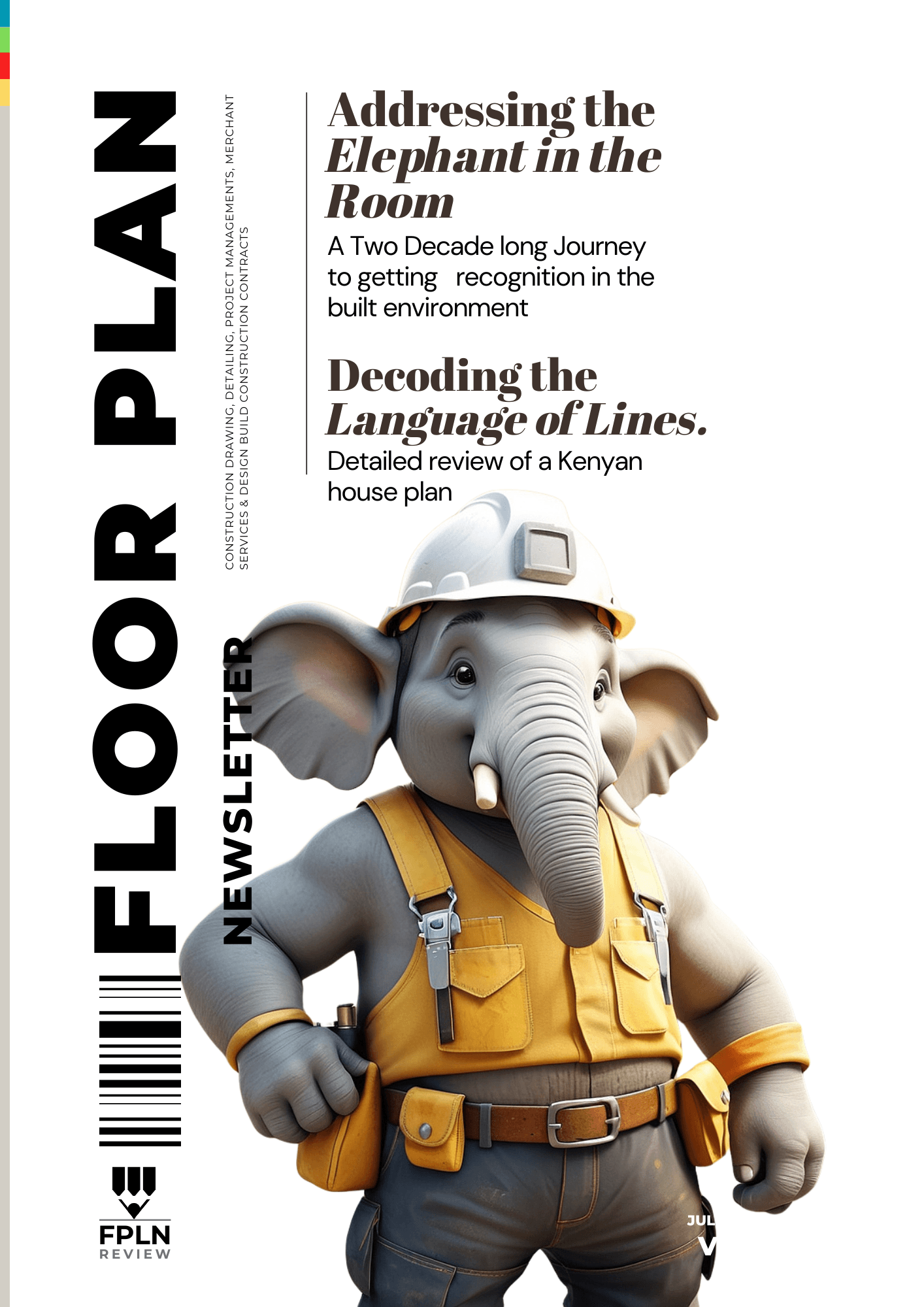
FLOOR PLAN
The latest issue is available in print and digital format